
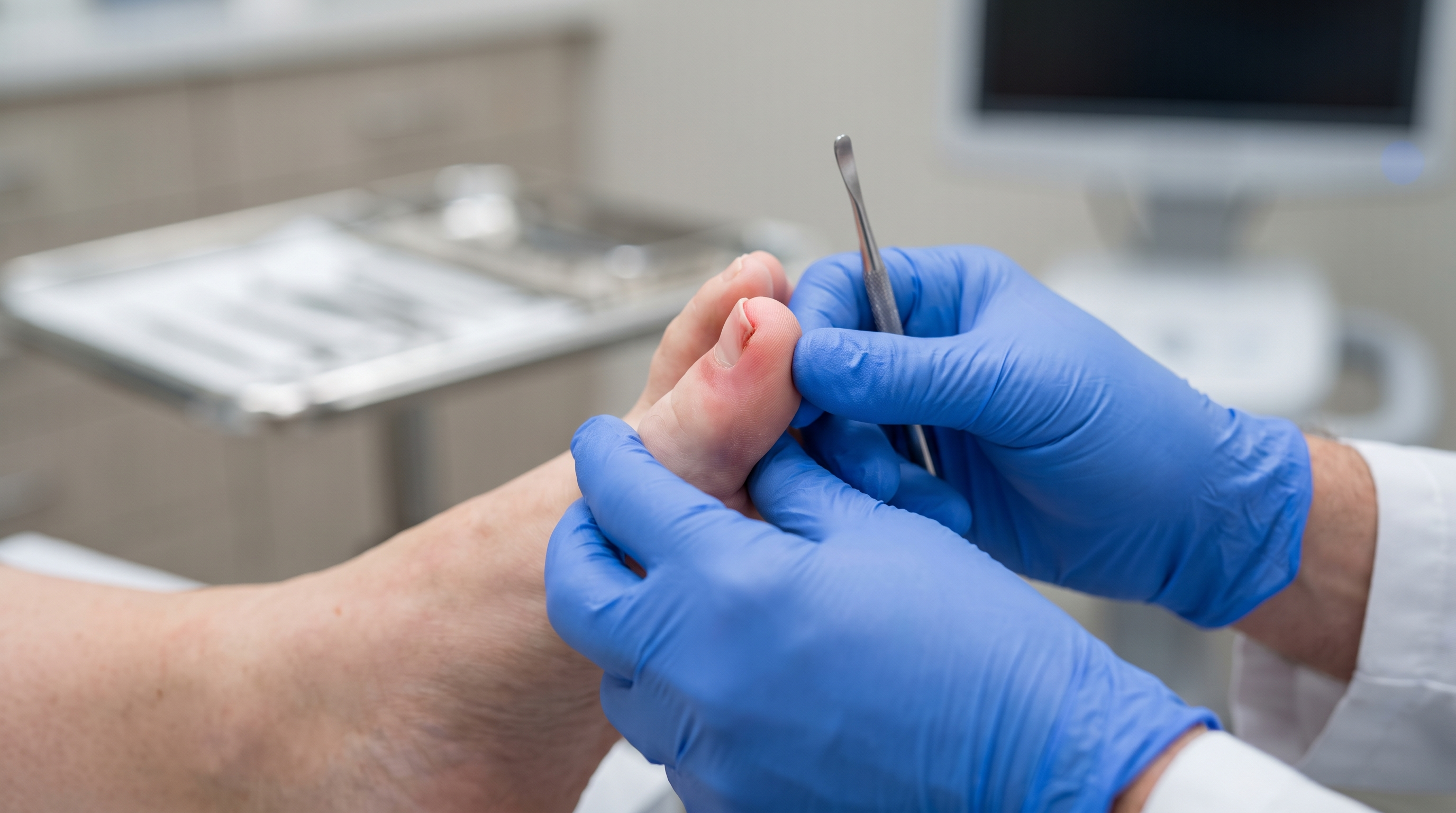
Common signs
An ingrown toenail usually starts with tenderness along the edge of the nail. As the nail presses into the skin, the toe may become red, swollen, painful in shoes, or sensitive to touch. Drainage, odor, or worsening redness can point to infection.
Why home treatment can backfire
Trying to dig the nail out at home often irritates the skin more and can push bacteria deeper into the toe. Cutting the nail too short or rounding the corners can also make the ingrown edge return.
What treatment may involve
A podiatrist can remove the painful nail edge safely, check whether infection is present, and explain aftercare. If the same nail keeps becoming ingrown, a small in-office procedure may be discussed to reduce the chance of recurrence.
Who should not wait
Diabetic patients, patients with poor circulation, and anyone with spreading redness, drainage, fever, or significant swelling should avoid self-treatment and call promptly. Earlier care is usually simpler and more comfortable.
This article is educational and does not replace an exam. If symptoms are severe, worsening, or related to diabetes, circulation concerns, infection, or a wound, call the office promptly.